
Find out how reverse psychology works and how you can use it to your advantage in everyday life
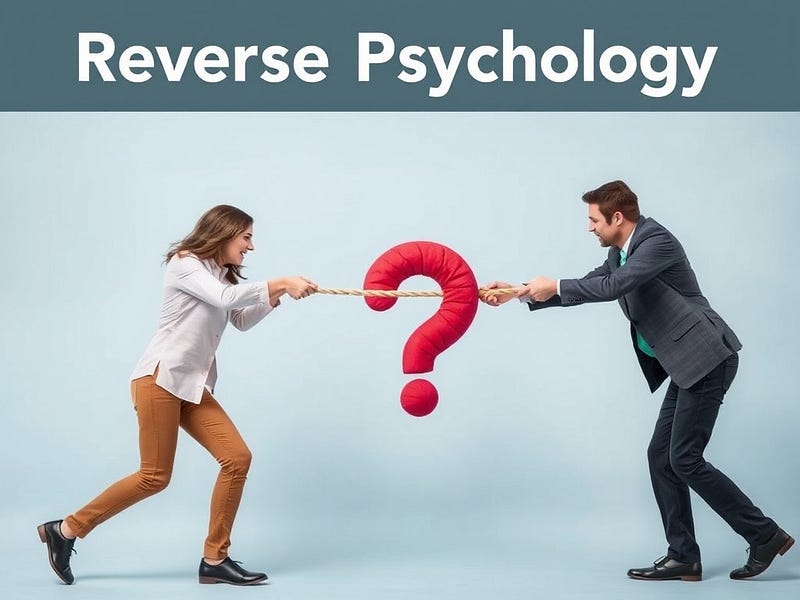
Ever wished you could get people to do exactly what you want without them even realising it? Welcome to the fascinating world of reverse psychology.
This powerful technique can help you navigate tricky situations, boost your persuasive skills, and achieve your goals effectively.
Let’s explore the magic behind this mind-bending approach and learn how to use it effectively.
🔑 Key Takeaways:
Understand the basics of reverse psychology and how it works.
Learn how and when to apply this technique effectively for better results.
Explore real-life examples and practical applications to understand the concept better.
Understand the ethical considerations involved in using reverse psychology.
Gain mastery in the art of subtle influence across various scenarios.
The Psychology Behind the Reverse
Reverse psychology is like a magic trick for the mind. It involves saying the opposite of your true intention to influence the other person to act in your desired way.
So, why does it work?
Our brains naturally push back when given direct orders, like a rebellious instinct.
When someone tells us, “Don’t do that,” a little voice in our head whispers, “Oh yeah? Watch me.”
This resistance to direct commands is known as ‘psychological reactance,’ and it is the key element that makes reverse psychology highly effective.
Think of it like a game of mental tug-of-war.
Instead of pulling hard towards your goal, you give a little slack. The other person, expecting resistance, suddenly finds themselves off balance and inadvertently moves in the direction you wanted all along.
The Power of Suggestion
Using reverse psychology is like planting a seed in someone’s mind by suggesting the opposite of what you actually want.
For example, if you want someone to eat their vegetables, you might say, ‘You probably won’t like these.’
By presenting it as something they might resist, they become more curious and are likely to do the opposite, just to prove you wrong.
You’re not compelling them to act; instead, you’re proposing an idea and allowing their curiosity and need for independence to take over.
For instance, instead of persuading your friend to visit your preferred restaurant, you could say, “I doubt it’s your kind of place. It might be too daring for your palate.”
Instantly, their curiosity is piqued, and they feel compelled to contradict you.
This method is effective because individuals enjoy the sense of autonomy and decision-making.
By seeming to discourage a certain action, you’re actually making it more appealing.
When to Use Reverse Psychology
Reverse psychology isn’t a one-size-fits-all solution. It works best in certain situations:
- With people who tend to be oppositional or rebellious
- When dealing with children or teenagers
- In negotiations where direct methods have failed
- To persuade someone to try something new
- When you want to avoid appearing pushy or controlling
In reverse psychology, the key is subtlety. If your attempt is too obvious, it can backfire and make the other person feel manipulated.
Real-Life Applications
Some everyday scenarios where reverse psychology can come in handy:
- Parenting: “I bet you can’t clean your room in 10 minutes.”
- Sales: “This product might be a bit too high-end for what you’re looking for.”
- Relationships: “You’re right, maybe we shouldn’t go out tonight. Let’s just stay in.”
- Work: “I don’t think you’re ready for this challenging project yet.”
- Self-motivation: “There’s no way I can finish this report by Friday.”
In each case, the statement aims to elicit the opposite reaction.
The Fine Line: Ethics and Overuse
While reverse psychology can be a powerful tool, it’s important to use it responsibly.
Overuse can lead to distrust and damage personal or professional relationships.
It’s important to think about the ethics involved and use this technique carefully and with good intentions.
Consider reverse psychology as a seasoning in your communication toolkit. A small amount can improve the quality of your interactions, but excessive use can spoil the outcome.
Mastering the Subtle Art
To become a pro at reverse psychology, you need to master the art of subtlety. It does not involve grand gestures or elaborate schemes. Subtle reverse psychology is most effective when the other person is unaware that it is being used.
Here are some tips to refine your technique:
- Pay attention to tone and body language.
- Use reverse psychology sparingly and in suitable situations.
- Always be prepared for unexpected reactions and have a plan in place.
- Always have a backup plan.
- Practice active listening to understand the other person’s motivations.
Keep in mind that the objective is to guide, not manipulate, when employing reverse psychology. Always use your influence for positive purposes!
The Reverse Psychology Toolbox
Now that you understand the basics, let’s fill your toolbox with some specific techniques:
- The Forbidden Fruit: Make something seem off-limits to increase its appeal.
- The Doubt Technique: Imply someone’s incapability to spur motivation.
- The Flaw Highlight Technique: Identify a minor imperfection to showcase broader positive attributes.
- The Biased Option Technique: Frame choices to make the preferred selection more appealing.
- The Limited Choice Technique: Eliminate options to enhance the attractiveness of the preferred selection.
Each of these tools can be incredibly effective when used skilfully and in the right context.
The Psychology of Persuasion
Reverse psychology is just one tool in the broader field of persuasion. Understanding the underlying principles of influence can enhance your effectiveness in all interactions.
Some key concepts to explore:
- Reciprocity: People tend to return favours.
- Limited availability increases desirability, as seen in the concept of scarcity.
- We are more inclined to follow requests from authority figures due to their perceived expertise and influence.
- People prefer to maintain consistency with their past actions and statements, a key concept known as consistency.
- We are more susceptible to influence from individuals we have a positive connection with, illustrating the concept of liking.
- Consensus involves seeking guidance from others to shape our behaviour.
To illustrate how combining these principles with reverse psychology leads to gentle persuasion, let’s consider a real-life scenario:
Scenario: Encouraging a Teen to Study
Imagine you’re a parent trying to motivate your teenage child to study for an important exam. You’ve noticed that direct encouragement, such as saying “You need to study more” or “You should focus on your grades,” has been met with resistance or disinterest.
This is where combining subtle principles like the Spotlight Effect with reverse psychology can come in handy.
Step 1: Understand the Spotlight Effect
Your teen’s resistance to your direct advice is most likely a result of their perception that you and others are watching every move they make. They don’t want to feel controlled or overly pressured, which is why they push back.
Step 2: Reverse Psychology
Instead of reinforcing the need to study, try taking a more unexpected approach. You might say something like, “You know, you probably don’t need to study that hard for this exam. You seem to have a pretty good handle on the material. If you’re comfortable with how much you already know, maybe you can take it easy.”
Step 3: Gentle Persuasion in Action
In doing this, the teen may start to second-guess their readiness and feel an inner drive to prove that they can indeed handle the exam. The reverse psychology subtly triggers a sense of autonomy and self-determination.
Now, instead of feeling pressure from you, they begin to self-motivate because they don’t want to seem overconfident or unprepared.
Step 4: Amplifying with Social Dynamics
To further this, you might mention that some of their friends are probably studying hard right now, not because they need to, but just in case. This taps into the social comparison element, making them feel as though studying might be a wise yet autonomous choice.
By using reverse psychology along with a keen awareness of the spotlight effect and social comparison, you gently guide the teen to take action without feeling pressured, creating a perfect example of subtle persuasion in action.
Putting It All Together
Now that you have all these tools at your disposal, it’s time to put them into practice. Begin with low-stakes situations to apply the tools effectively and closely observe the results. Over time, you’ll naturally learn when and how to best use reverse psychology.
Keep in mind that the aim is to create win-win situations where everyone benefits from the outcome. When used wisely, reverse psychology can assist you in gracefully navigating social situations and easily accomplishing your goals.
Got Questions?
Is reverse psychology a form of manipulation?
Reverse psychology can be seen as a form of influence, but whether it’s manipulation depends on the intent and context. When used ethically and with good intentions, it’s a tool for effective communication.
Does reverse psychology work on everyone?
No, it’s not universally effective. Some people are more susceptible than others, and its effectiveness can vary depending on the situation and relationship between the people involved.
Does reverse psychology have negative consequences?
Yes, if used too obviously or frequently, people may catch on and react negatively. It’s important to use this technique judiciously and with awareness of the other person’s feelings and reactions.
Is it okay to use reverse psychology on children?
Although effective with children, it should be used in moderation alongside open, honest communication. Overuse can lead to trust issues.
What are the signs that someone is employing reverse psychology on me?
Observe situations where someone dissuades you from an action, leading you to feel more inclined to do it. If you suspect reverse psychology, take a step back and consider your true motivations.
Wrapping Up
Reverse psychology is like a secret superpower in the world of communication. When used skilfully, reverse psychology can help you navigate tricky social situations.
It can also assist you in achieving your goals and boosting your relationships.
However, it’s important to remember that using this technique comes with a significant level of responsibility.
When practicing this technique, prioritise the other person’s feelings and well-being at all times.
Using reverse psychology effectively means ensuring that both parties are satisfied with the end result.
So go forth, experiment, and may your interactions be filled with subtle influence and positive results!
Thanks for reading…
If you enjoyed reading my story, please highlight any parts you think other readers would find interesting.
A couple of claps 👏 wouldn’t go amiss, either.
Don’t forget to leave your comments about what you thought of this story.
Consider following me here on Medium and subscribing to my stories.
Discover more from nom@d learning
Subscribe to get the latest posts sent to your email.
 nom@d learning
Leave a comment