
Discover amazing brainless creatures that will shock you! Learn how these unique beings survive and thrive
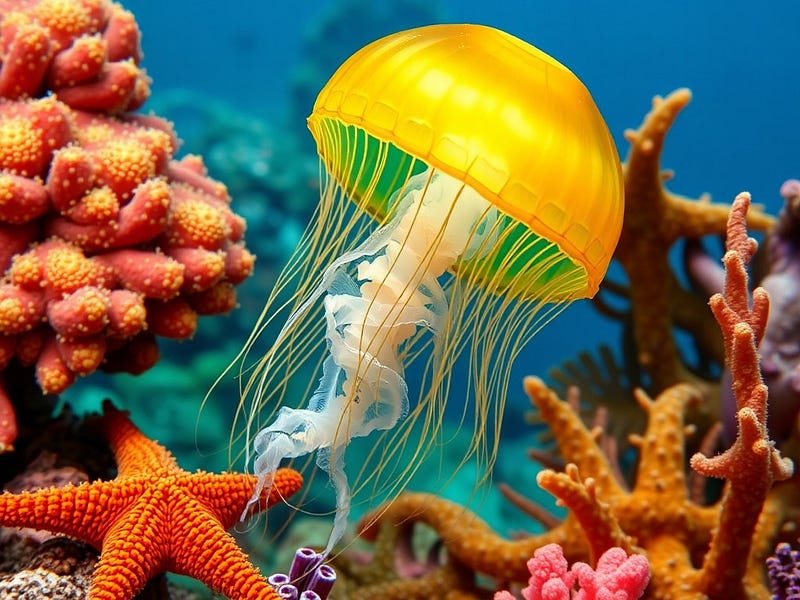
You’re strolling barefoot along a sandy beach, the salty breeze tousling your hair. The rhythmic sound of waves fills the air, and as you look out over the shimmering blue, a jellyfish drifts gracefully just below the surface, its translucent body pulsing with each gentle current. It gracefully propels itself, hunts prey, and even reproduces.
Surprisingly, it doesn’t have a brain!
Welcome to the wild world of brainless creatures that’ll blow your mind.
In this article, we’ll dive into the captivating lives of 10 animals that manage to survive and even thrive without the luxury of a brain.
You’ll learn how these amazing creatures move around, locate food, and outsmart predators, all without the brainpower we usually link to intelligence.
🔑 Key Takeaways:
Discover 10 animals that function without a brain.
Learn how these creatures survive and adapt.
Understand alternative nervous systems in nature.
Explore the surprising capabilities of brainless organisms.
Gain a new perspective on intelligence in the animal kingdom.
1. Jellyfish: The Pulsing Predators
Jellyfish are like the ultimate minimalists of the ocean. They’ve been around for over 500 million years, and they’ve never bothered with fancy things like brains or hearts.

But don’t let their simplicity fool you — these gelatinous creatures are masters of survival.
Their basic design allows them to drift effortlessly on ocean currents, while their stinging tentacles help them capture prey without the need for complex hunting strategies.
It’s a perfect example of how nature favours efficiency over complexity.
Jellyfish have a network of nerves spread throughout their bodies, which helps them sense their surroundings. This network helps them respond to their environment and carry out essential functions.
This simple system allows them to respond to their environment, catch prey, and avoid danger. Their instincts guide them effortlessly, ensuring their survival.
Jellyfish exhibit a wide range of sizes, from the minuscule thimble jellyfish to the colossal lion’s mane jellyfish, with tentacles reaching lengths of up to 100 feet. That’s longer than a school bus! And get this — some species of jellyfish have the ability to regenerate and potentially live indefinitely.
The Turritopsis dohrnii, also known as the immortal jellyfish, has a remarkable ability to reverse its life cycle, transforming back into its juvenile form when stressed or injured.
It’s as if this creature has unlocked its own biological fountain of youth, allowing it to potentially live indefinitely.
2. Sea Sponges: The Living Filters
Sea sponges are the couch potatoes of the ocean world. They attach themselves to a spot and stay there for life, filtering water for food and oxygen.
But don’t mistake their sedentary lifestyle for laziness — these brainless wonders are working hard!

Sea sponges are so basic that scientists once debated whether they were plants or animals. Spoiler alert: they’re animals, just really, really simple ones.
Sea sponges lack complex organs, a central nervous system, or distinct tissues like those found in more advanced animals. Instead, sea sponges consist of specialised cells that cooperate to sustain the sponge’s life.
These living filters can process water equivalent to 20,000 times their body volume in a day, which is like drinking an Olympic-sized swimming pool every 24 hours!
Even without a brain, sea sponges have some surprising abilities. Some species can rearrange their cells to change shape or even move slowly across the sea floor.
Not bad for a creature without a single neurone!
3. Starfish: The Regenerating Radials
Starfish, or sea stars if you want to sound fancy, are the superheroes of the ocean floor. These five-armed wonders can regenerate lost limbs and even grow into two separate individuals if cut in half, essentially creating two new starfish.
And they achieve all this without a central brain!
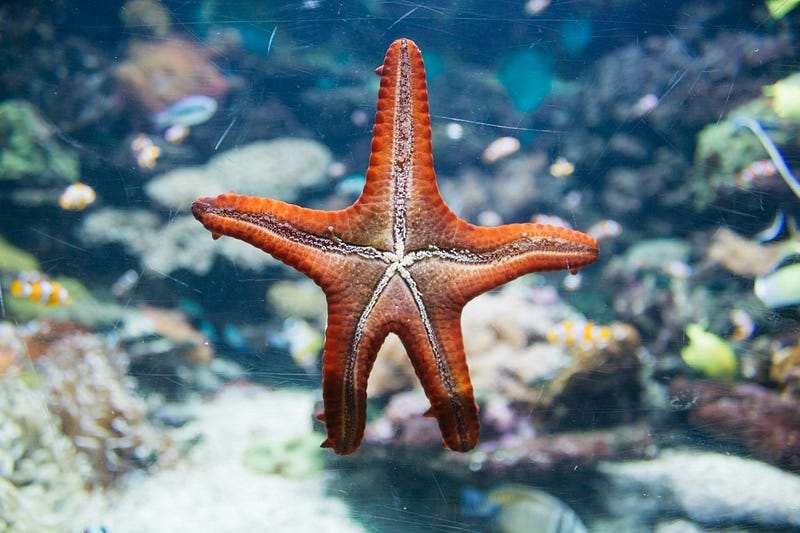
Starfish lack a central brain but possess a sophisticated nervous system that extends through each of their arms, allowing them to coordinate movement and responses.
It’s like each arm has its own mini-brain, working together to control the whole animal. This decentralised system allows starfish to be incredibly resilient — lose an arm? No problem, just grow a new one!
Starfish use thousands of tiny tube feet to move, hunt, and pry open clams and oysters on the ocean floor.
They then push their stomachs out of their bodies to digest their meal externally.
It’s like having a picnic, but much grosser, as they push their stomachs out to digest their meal externally.
4. Coral: The Living Skyscrapers
Coral, although resembling underwater rocks, are living organisms with intricate structures.
These are small creatures known as polyps that collaborate to build large structures visible from space!
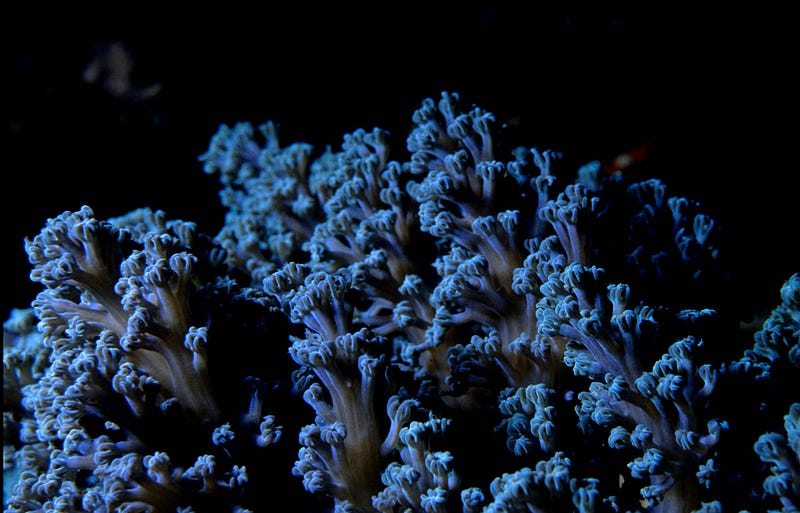
Imagine each coral polyp as a miniature, instinct-driven architect. They produce calcium carbonate to construct their protective skeletons, which gradually develop into the magnificent reefs we observe today. And they do all this without a single neurone firing!
Coral reefs harbour twenty-five percent of all marine species, highlighting their essential role in ocean ecosystems.
Similar to lively cities, coral reefs serve as bustling hubs in the sea, offering sustenance and refuge to numerous species.
Similarly to urban centres, coral reefs confront obstacles such as pollution and climate change.
Despite their simplistic nature, these marvels of the sea exhibit remarkable resilience — certain species can endure bleaching incidents and adapt to higher water temperatures.
5. Hydra: The Immortal Regenerators
Hydra, named after the multi-headed monster of Greek mythology, is a tiny freshwater animal that packs a big punch.
These brainless creatures can regenerate their entire bodies from just a small piece and potentially live forever under the right conditions.

Instead of a brain, hydra possess a simple nerve network similar to jellyfish. This allows them to respond to touch and light and even hunt tiny prey with their stinging tentacles.
It’s as if they are constantly seeking and capturing their food, like in a never-ending game.
The most mind-blowing thing about hydra is their potential immortality. They constantly renew their cells, replacing old ones with fresh ones.
This implies that, except for illness or being preyed upon, a hydra could potentially live indefinitely. Talk about the fountain of youth!
6. Flatworms: The Two-Headed Wonders
Flatworms might not win any beauty contests, but these brainless creatures have some seriously cool tricks up their sleeve.
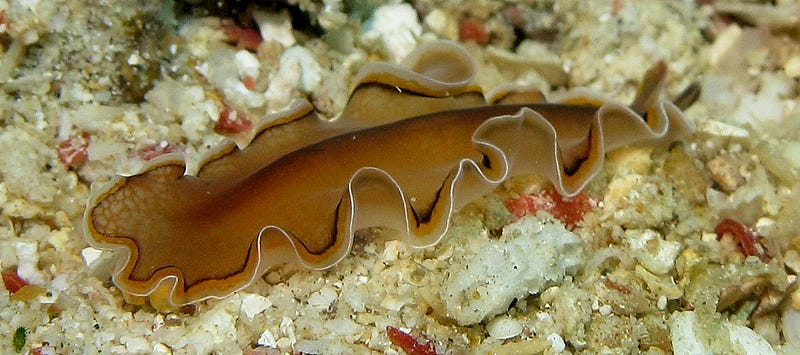
For starters, they can regenerate lost body parts, including their head. When a flatworm is cut in half, each piece can regenerate into a complete worm. It’s like a magic trick, but with worms!
While flatworms don’t have a brain, they do have a simple nervous system with two nerve cords running the length of their body. This enables them to react to stimuli and learn from interactions with the environment. Some species can even be trained to navigate simple mazes!
Here’s a fun fact: some flatworms have two heads! In specific species, cutting the head lengthwise can lead to the regeneration of two separate heads. It’s like having a built-in buddy system!
7. Sea Cucumbers: The Ocean’s Vacuum Cleaners
Sea cucumbers may appear slow-moving and blob-like, but these brainless creatures play a crucial role as the unsung heroes of the ocean floor. They function as natural cleaners by ingesting debris and maintaining the cleanliness of the seafloor.
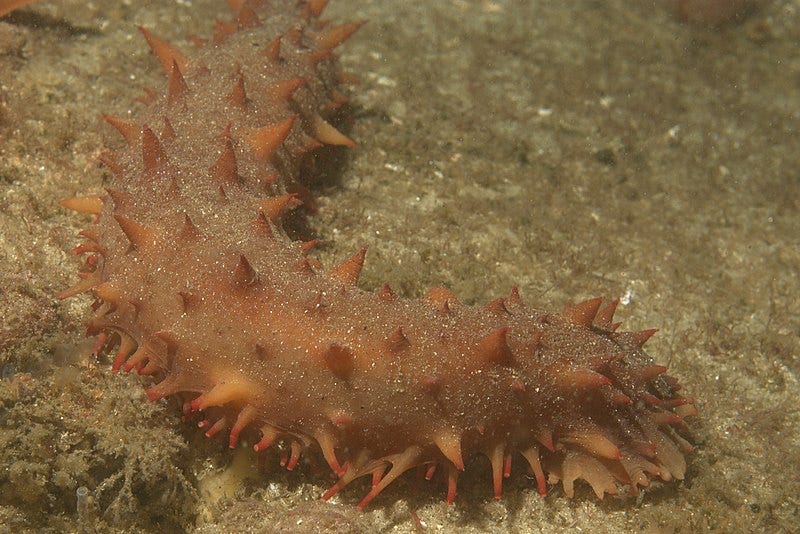
Instead of a brain, sea cucumbers have a simple ring of nerve tissue around their mouth. Their simple ring of nerve tissue around the mouth allows sea cucumbers to respond to touch and chemical cues in their environment. While they may not engage in complex problem-solving like math, sea cucumbers excel in their specialised roles!
Sea cucumbers have a special way to defend themselves: when in danger, some species can push out their internal organs through their rear end to divert predators. They can regrow these organs later. It’s like the ultimate “take my wallet” distraction technique!
8. Clams: The Burrowing Bivalves
Clams might seem like simple creatures, but these bivalves without brains have some surprising abilities. They can burrow into sand, filter water for food, and even produce pearls — all without a single nerve cell!
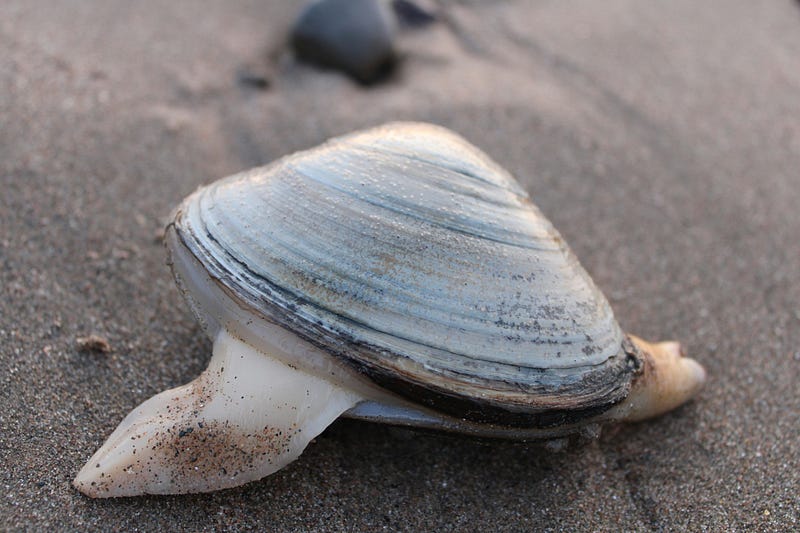
Instead of a brain, clams have three pairs of nerve clusters spread throughout their body. This simple network of nerves allows them to respond to changes in their environment, like the presence of predators or changes in water quality.
Some species of clams, known for their remarkable longevity, can live for over 500 years! The oldest known clam, nicknamed Ming, was estimated to be 507 years old when it was discovered, surpassing the age of many nations like the United States! That’s older than the United States! Talk about standing the test of time.
9. Amoebas: The Shape-Shifting Singles
Amoebas are single-celled organisms that prove you don’t need a brain — or even multiple cells — to be a successful life form. Amoebas, as single-celled organisms, can alter their shape, capture prey, and demonstrate basic problem-solving skills.
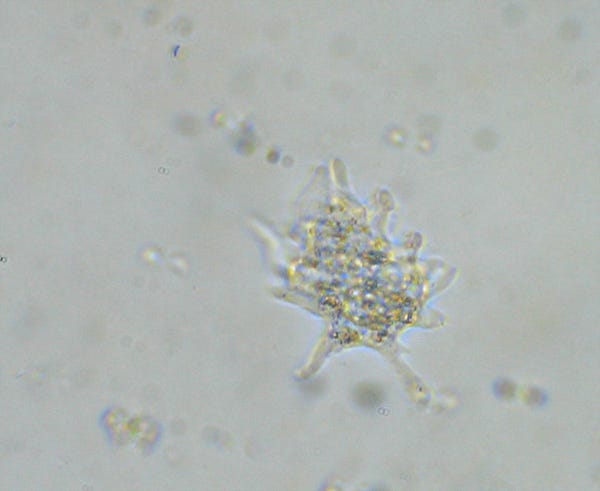
Amoebas don’t have a traditional nervous system at all. Instead, they react to their surroundings through chemical processes within their single cell. It’s as if their entire body functions like a giant nose, constantly sniffing out changes in the environment!
Although simple in structure, amoebas can exhibit relatively intricate behaviours. Some species can construct protective shells from surrounding materials, while others can join together to form intricate networks of interconnected cells. It’s like observing a team of miniature builders assembling without any blueprints!
10. Moss Animals: The Aquatic Architects
Moss animals, also known as bryozoans, are tiny aquatic creatures that live in colonies, which often resemble plants or coral. Even without brains, they build complex structures that provide homes for their entire community.
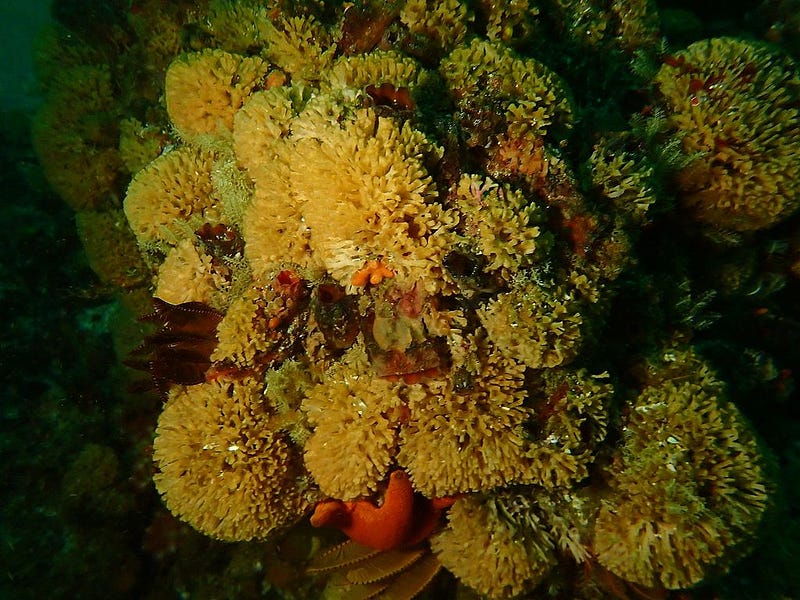
While individual moss animals don’t have brains, they do have a simple nervous system that allows them to respond to stimuli. As a collective, the colony of moss animals can display advanced behaviours such as coordinated feeding and working together to defend against predators.
Some species of moss animals can reproduce through a process called “budding,” which is when new individuals develop from existing ones in a growth-like manner. It’s like observing a self-assembling puzzle come together before your eyes!
Got Questions?
How do these animals survive without a brain?
These creatures have evolved alternative systems to process information and respond to their environment. These creatures employ distributed nerve networks, or basic ganglia, to organise and control their actions.
Can brainless animals learn or remember things?
Surprisingly, some can! Certain flatworms, for example, can be trained to navigate simple mazes, showing a basic form of learning and memory.
Are these animals considered intelligent?
Intelligence is a complex concept, and these animals challenge our traditional understanding of it. While they may not be “intelligent” in the way we typically think of it, they are incredibly well-adapted to their environments.
Do any of these animals pose a threat to humans?
Certain species of jellyfish are capable of stinging humans, leading to discomfort or potentially severe injuries. Fortunately, the majority of these creatures pose no threat to humans and contribute significantly to the balance of their respective ecosystems.
Is it possible that researching these animals could inspire advancements in artificial intelligence or robotics?
Absolutely! The simple yet effective ways these animals process information and respond to their environment could inspire new approaches in fields like swarm robotics and distributed computing systems.
Wrapping Up
As we’ve seen, brains aren’t everything in the animal kingdom. These 10 fascinating creatures prove that life finds a way, even without the complex neural networks we often associate with intelligence and survival.
From the immortal hydra to the shape-shifting amoeba, each of these brainless wonders has carved out its own niche in the world. They’ve adapted, survived, and in many cases thrived for millions of years, all without requiring a central control system.
Next time you doubt your cognitive abilities, reflect on the resilience of creatures like the sea cucumber or the productivity of the coral polyp and consider their examples. These creatures remind us that there’s more than one way to tackle life’s challenges. Who knows? Perhaps we can all take a lesson from our brainless buddies on simplifying our lives and concentrating on what truly matters.
In the end, these animals show us that nature’s ingenuity knows no bounds. Brain or no brain, life always finds a way to persist, adapt, and amaze us with its endless creativity.
Thanks for reading…
If you enjoyed reading my story, please highlight any parts you think other readers would find interesting.
A couple of claps 👏 wouldn’t go amiss, either.
Don’t forget to leave your comments about what you thought of this story.
Consider following me here on Medium and subscribing to my stories.
Discover more from nom@d learning
Subscribe to get the latest posts sent to your email.
 nom@d learning
Leave a comment