
Ready to uncover the universe’s secrets? Check out these amazing cosmic mysteries that leave scientists searching for answers
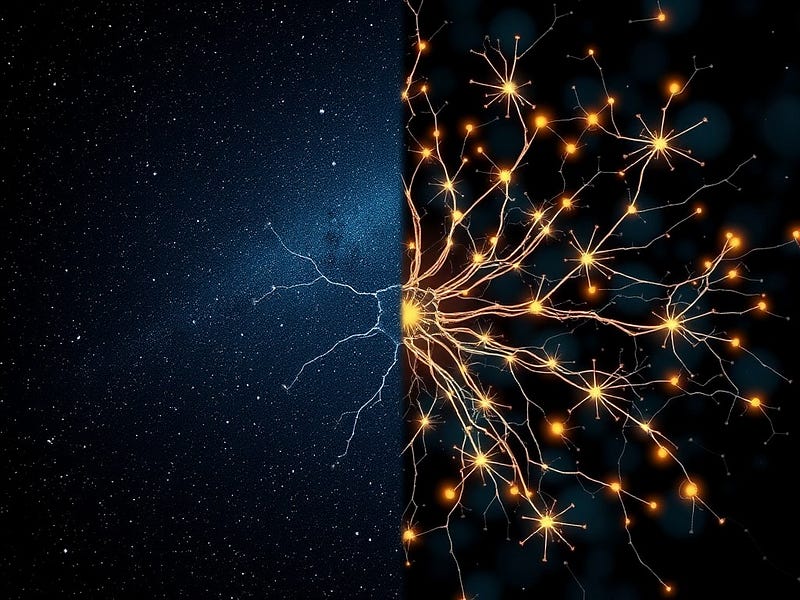
Have you ever wondered what keeps the world’s brightest minds scratching their heads?
Get ready for a journey through the cosmos, into the depths of our planet, and even into our own minds as we explore ten scientific puzzles that continue to perplex researchers.
These aren’t just ordinary questions—they’re the brain teasers that could revolutionise our understanding of, well, everything.
🔑 Key Takeaways:
Scientific mysteries cover various fields, from cosmology to neuroscience.
Some longstanding questions have puzzled researchers for centuries.
New discoveries often lead to even more interesting questions.
Solving these puzzles could transform our understanding of the universe and ourselves.
The search for answers fuels scientific progress and innovation.
1. The Dark Side of the Universe: Dark Matter and Dark Energy
Imagine trying to bake a cake with invisible ingredients, making up 95% of what you need. That’s kind of what astronomers face when they look at the universe.
Only a small fraction, around 5%, of the universe is visible to us; the majority consists of enigmatic substances known as dark matter and dark energy.
Dark matter behaves like an invisible guest at a party; it does not interact with light, making it impossible for us to observe directly.
But we know it’s there because we can see its gravitational effects on visible matter. It’s similar to watching a chair glide across the room and inferring that someone, perhaps a mischievous pet, is nudging it along.
In contrast, dark energy can be likened to a power boost for the universe.
It’s causing the expansion of the universe to speed up rather than slow down as we’d expect due to gravity. Scientists are still puzzled about the composition of these cosmic enigmas.
Certain theories propose that dark matter may consist of weakly interacting massive particles (WIMPs) or axions.
Regarding dark energy, concepts vary from cosmological constants to scalar fields. However, at this point, these are merely informed speculations.
The quest persists, with endeavours such as the Large Hadron Collider and space-based observatories actively contributing to the exploration.
2. The Origin of Life: From Soup to Cells
How did life evolve from a mixture of chemicals to the diverse organisms we observe today?
It’s similar to understanding how a pile of Lego bricks transformed into a complete Lego city without someone assembling it.
Scientists have successfully produced some fundamental components of life in laboratory settings resembling the conditions of ancient Earth.
But the transition from these basic molecules to self-replicating organisms still presents a significant challenge.
One hypothesis, known as the “RNA World” theory, proposes that RNA molecules may have been the initial molecules capable of storing genetic data and facilitating chemical reactions.
It’s akin to discovering a versatile Swiss Army knife in the primordial soup — a molecule with multiple functions that could have initiated life.
Other theories propose that life might have started in hydrothermal vents deep in the ocean or even arrived from space via meteorites.
Researchers are delving into various aspects, ranging from the chemistry of ancient Earth to the potential existence of life on other planets, in their continuous pursuit of answers.
3. Consciousness: The Ghost in the Machine
As you read this, you are conscious of your own thoughts and experiences. But how do the firing neurons in your brain give rise to the subjective experience of consciousness?
It’s like trying to find the ‘you’ in a tangle of electrical wires.
This challenging question, known as the ‘hard problem of consciousness,’ has puzzled philosophers and scientists for centuries.
- Some argue that consciousness emerges from complex information processing in the brain.
- Others suggest it might be a fundamental property of the universe, like gravity or electromagnetism.
While recent progress in neuroscience has enabled us to observe the brain in action, we are still distant from grasping how neural activity gives rise to subjective experiences.
It’s akin to observing the illuminated circuits of a computer and attempting to discern the user’s thoughts.
The enigma of consciousness raises profound enquiries about the essence of reality and our position in the cosmos.
Are we merely highly intricate biological systems, or does our inner experience hold deeper significance? The debate continues on this matter.
4. Quantum Entanglement: Spooky Action at a Distance
Imagine you have two coins that, no matter how far apart they are, always land on opposite sides.
Quantum entanglement works similarly, creating a mysterious connection between particles that affects their states instantly, even if they’re miles apart.
Einstein described this as a phenomenon where distant particles seem to influence each other faster than light could travel between them, which puzzled scientists for decades.
When two particles become entangled, measuring one of them immediately affects the state of the other, no matter how much distance separates them.
Experiments have confirmed this behaviour repeatedly, yet the underlying reasons remain unclear.
You might think of it as a pair of “magic socks” that always match, even if one is in the laundry and the other on your foot.
Quantum entanglement isn’t just fascinating — it could revolutionise technology, with potential applications in quantum computing, secure communication, and even the transfer of information (though not physical objects) across distances.
5. The Fate of the Universe: Big Crunch, Big Freeze, or Something Else?
Will the universe end with a bang, a whimper, or something we haven’t even thought of yet?
It’s similar to trying to guess how a movie will end without knowing its genre.
The fate of the universe is influenced by factors such as its structure, the quantity of matter it holds, and the enigmatic dark energy mentioned earlier.
If there’s sufficient matter, gravity could eventually overpower the expansion and lead to a collapse known as a ‘Big Crunch.’
If dark energy continues to push everything outward, we could face a ‘Big Freeze,’ causing galaxies to drift apart so extensively that the night sky darkens.
Some theories propose a ‘Big Rip,’ in which dark energy intensifies to the point of ripping apart atoms.
There’s also the idea of a ‘cyclic universe’ that continuously expands and contracts, similar to a cosmic accordion.
Alternatively, our universe could be one of numerous universes within a vast multiverse. In reality, we remain uncertain about the final destiny of the universe.
6. The Mystery of Mass: Why Things Weigh What They Do
Why does an elephant weigh more than a mouse? While size is a factor, it alone doesn’t account for the difference in weight between an elephant and a mouse.
It’s like asking why some Lego bricks are heavier than others when they’re all made of the same plastic.
The discovery of the Higgs boson in 2012 greatly advanced our understanding of mass. According to the Standard Model of particle physics, particles interact with the Higgs field to gain mass, similar to how a magnet attracts metal.
But the Higgs mechanism doesn’t explain everything. It explains only a small portion of the mass of protons and neutrons, the predominant components of visible matter in the universe.
The additional mass originates from the energy carried by the quarks moving within these particles, as described by Einstein’s well-known equation, E=mc².
Another puzzling aspect is why the Higgs field possesses its specific strength. If it were much weaker or stronger, the universe as we know it couldn’t exist.
It’s akin to a complex puzzle waiting to be solved—leaving us with unanswered questions about the universe.
7. The Arrow of Time: Why Can’t We Remember the Future?
We all know that time moves forward—eggs break, but they don’t unbreak. We remember the past, but not the future. But why?
The laws of physics work just as well backwards as forwards, so where does this “arrow of time” come from?
This puzzle is closely tied to the concept of entropy—the tendency for systems to become more disordered over time.
It’s why your room gets messy if you don’t clean it, but it doesn’t spontaneously tidy itself up.
But why was the early universe in such a low-entropy state to begin with?
It’s like wondering why you started with a clean room in the first place.
Some theories suggest that our observable universe is just a small part of a much larger multiverse, and we just happen to be in a region that started out neat and tidy.
The arrow of time also raises questions about free will and the nature of cause and effect.
If the future is as set as the past, do we really make choices? Or are we just along for the ride in a predetermined universe?
8. The Origin of the Moon: A Cosmic Collision?
Our moon is more than just a pretty nightlight—it stabilises Earth’s axis, creates the tides, and may have been crucial for the development of life. But where did it come from?
It’s like trying to figure out how you ended up with an extra cookie on your plate—did someone give it to you, or did it magically appear?
The leading theory is the “Giant Impact Hypothesis,” which suggests that a Mars-sized body collided with the early Earth, and the debris from this cosmic fender-bender coalesced to form the Moon.
It’s a bit like making a smoothie by accidentally dropping a whole fruit into the blender.
This theory explains many of the Moon’s features, like why it’s less dense than Earth and why the Earth-Moon system has so much angular momentum.
But it also raises new questions. For example, why are Earth and Moon rocks so similar in composition if the Moon formed from a mixture of Earth and impactor material?
Recent variations on the theory, like the “synestia” model, try to address these issues.
But the details of our moon’s birth remain a subject of ongoing research and debate.
9. The Nature of Time: Is It Fundamental or Emergent?
We all experience time passing, but what is time, really? Is it a fundamental part of the universe, like space, or is it something that emerges from more basic phenomena?
It’s like wondering whether the ticking of a clock is what creates time or if time would still flow even without anything to measure it.
Some theories, like Einstein’s theory of relativity, treat time as a component of the universe’s fabric that is relative to the observer and warped by gravity.
But in quantum mechanics, time is treated differently, leading to conflicts between these two fundamental theories.
- Some physicists argue that time is an illusion, an emergent property that arises from quantum entanglement.
- Others suggest that time is real but flows in both directions, with our perception of a one-way flow being an artefact of our macroscopic perspective.
The nature of time touches on deep questions about the structure of reality, the possibility of time travel, and even the existence of free will. It’s a puzzle that bridges physics, philosophy, and our everyday experience of the world.
10. The Fermi Paradox: Where Is Everybody?
Look up at the night sky. With billions of stars in our galaxy alone, surely some of them must host intelligent life, right? So why haven’t we heard from anyone?
This puzzle, known as the Fermi Paradox, is like throwing a huge party and having no one show up.
There are many potential explanations, ranging from optimistic to downright scary.
Maybe we’re just too far apart in space and time. Perhaps civilisations tend to destroy themselves before they can reach out to the stars.
Or maybe we’re in a cosmic wildlife preserve, with alien civilisations watching us like we’re in a zoo.
- Some scientists argue that we’re simply not looking in the right way. After all, we’ve only been capable of interstellar communication for a tiny blip of cosmic time.
- Others suggest that truly advanced civilisations might be unrecognisable to us—we might be overlooking signs of their presence.
The search for extra-terrestrial intelligence continues, with projects like SETI scanning the skies for signals.
But so far, the cosmic airwaves remain eerily quiet. Are we alone in the universe, or just not tuned to the right channel?
Got Questions?
What’s the biggest obstacle to solving these scientific mysteries?
The biggest challenge is often that these mysteries push the boundaries of our current scientific understanding and technological capabilities. We’re often trying to study phenomena that are extremely distant, incredibly small, or conceptually alien to our everyday experience.
Are there any common threads linking these mysteries?
Many of these mysteries touch on fundamental questions about the nature of reality, the origins of the universe and life, and our place in the cosmos. They often require us to think beyond our usual frames of reference and challenge our intuitive understanding of the world.
How do scientists approach these unsolved problems?
Scientists use a combination of theoretical work, experimental research, and observational studies to chip away at these mysteries. They develop new theories, design experiments to test these theories, and create increasingly sophisticated tools to observe and measure the universe.
Could solving one of these mysteries help solve others?
Absolutely! Many of these mysteries are interconnected. For example, understanding dark energy could shed light on the fate of the universe, while unravelling the nature of consciousness might give us new insights into quantum mechanics.
What impact would solving these mysteries have on everyday life?
While some of these puzzles might seem abstract, solving them could have profound implications. Understanding dark energy might lead to new energy technologies; deciphering consciousness could revolutionise medicine and AI; and contact with extra-terrestrial intelligence would fundamentally change our view of our place in the universe.
Wrapping Up
As we’ve seen, the universe is full of mysteries that continue to challenge our brightest minds. From the vast expanses of space to the microscopic world of quantum particles, and from the origins of life to the nature of consciousness, there’s still so much we don’t understand.
But that’s what makes science so exciting. Each mystery solved opens up new questions, pushing us to explore further and think deeper. These unsolved puzzles drive innovation, inspiring new experiments, technologies, and ways of thinking.
As we continue to probe these mysteries, we’re not just expanding our knowledge—we’re expanding our understanding of our place in the cosmos. Who knows? The answers to these questions might be closer than we think. Or they might lead us to even more profound mysteries we haven’t even thought of yet.
So the next time you look up at the stars, remember: there’s a whole universe of questions out there, waiting to be answered. And who knows? Maybe you’ll be the one to crack one of these cosmic puzzles.
Thanks for reading…
If you enjoyed reading my story, please highlight any parts you think other readers would find interesting.
If you tried my FREE microlearning course, let me know if you enjoyed it.
A couple of claps 👏 wouldn’t go amiss, either.
Don’t forget to leave your comments about what you thought of this story and the free microlearning course.
Consider following me here on Medium and subscribing to my stories.
Discover more from Nom@d learning
Subscribe to get the latest posts sent to your email.
 Nom@d learning
Leave a comment