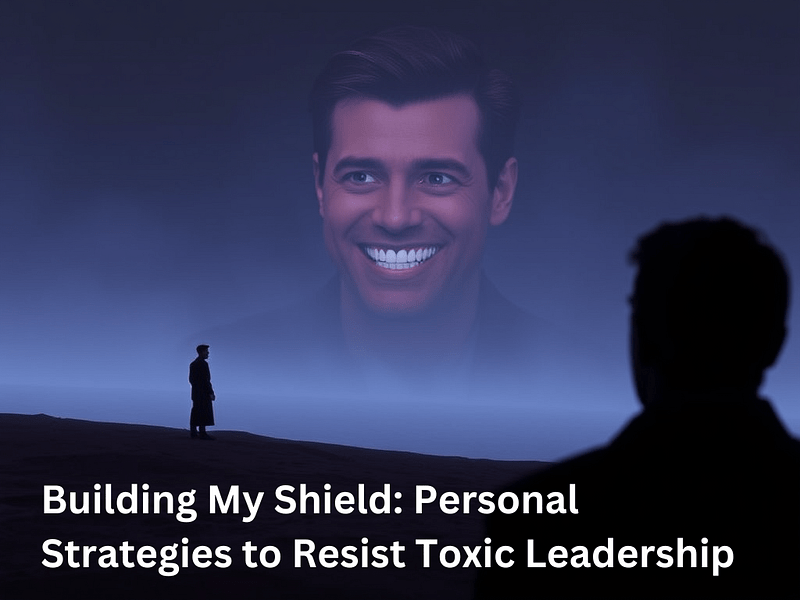
How I learned to set boundaries and protect myself from harmful influence.
Follow my journey of building a personal shield against toxic leadership by setting boundaries, trusting your instincts, and fostering a supportive network.
Note: This is part 4 of a series of 5 articles about The Dark Side of Charisma: When Leadership Turns Toxic.
Building My Shield
There came a time when I realised that protecting my well-being required more than just hope—it required action.
Jake’s charm, something I once admired, had slowly given way to manipulative behaviours that undermined my confidence.
In this article, I share the practical steps I took to build my shield against toxic leadership, reclaiming my sense of self-worth in the process.
Recognising the Need for Protection
At the heart of my journey was the realisation that I couldn’t ignore my discomfort. The mixed signals, constant criticism in private, and gradual isolation from trusted colleagues all signalling to me that I needed to stand up for myself.
Signs I Could No Longer Ignore:
- Emotional Drain: Anxiety and self-doubt replaced the energy I once felt.
- Confusing Feedback: Public praise turned into hidden criticism, leaving me questioning my abilities.
- Isolation: I found it increasingly difficult to seek advice from those I trusted.
These signs prompted me to take decisive steps to protect my mental and emotional health.
Building the Shield: Practical Steps
I began by creating a personal strategy that allowed me to set clear boundaries and maintain a sense of control over my work environment.
This shield was not built overnight—it was the result of deliberate, small actions that added up over time.
Step 1: Documenting Experiences
I started a journal to record my feelings after meetings and one-on-one conversations. Writing down my thoughts helped me see recurring patterns and provided concrete examples of when my boundaries were being crossed.
- Daily Reflections: Note the tone of each interaction.
- Identify Patterns: Look for repeated behaviours that left you feeling uneasy.
- Use as Evidence: Documentation can help if you ever need to address these behaviours formally.
Step 2: Setting Clear Boundaries
One of the most important lessons I learned was the value of clear boundaries. I took the time to articulate what was acceptable and what was not—both to myself and to those around me.
- Define Your Limits: Understand what behaviour you will and will not tolerate.
- Communicate Clearly: Politely but firmly state your boundaries in conversations.
- Enforce Consistently: Stand by your limits even when faced with pressure.
Step 3: Cultivating a Support Network
I reached out to colleagues and friends who had experienced similar challenges. By sharing my story and listening to theirs, I built a network of support that helped me remain grounded.
- Open Discussions: Regularly speak with trusted peers about your experiences.
- Seek Honest Feedback: A fresh perspective can validate your feelings.
- Offer and Receive Support: Create a culture of mutual trust and understanding.
Step 4: Regular Self-Reflection
I made it a habit to pause and assess my feelings and experiences. Self-reflection helped me understand when I was compromising my values and when I needed to stand firmer.
- Scheduled Check-Ins: Set aside time each week to evaluate your mental state.
- Acknowledge Small Wins: Celebrate moments when you successfully upheld your boundaries.
- Adjust as Needed: Use reflection to fine-tune your approach to handling toxic behaviours.
Personal Anecdotes: Moments of Change
There were many moments when I felt the pressure to conform to Jake’s style.
In one instance, after a particularly draining meeting, I decided to step away and reassess.
I reached out to a colleague who shared similar experiences. Together, we reviewed our journal entries and confirmed that the behaviour was not normal—it was harmful. This validation gave me the courage to firmly restate my boundaries in the next meeting.
Long-Term Benefits of Building Your Shield
Taking these steps was not just about protecting myself in the moment—it was about creating a foundation for long-term resilience. By building my shield, I learned that I could reclaim my sense of worth and maintain control over my environment.
What I Gained:
- Increased Confidence: Knowing your limits empowers you to say no.
- Improved Well-Being: Reducing emotional drain leads to better overall health.
- Stronger Relationships: A supportive network creates a positive work atmosphere.
- Clearer Vision: With a solid shield, you can focus on what truly matters.
These benefits have not only helped me survive a toxic environment but have also paved the way for personal and professional growth.
Wrapping Up
Building a shield against toxic leadership is an ongoing process. It requires vigilance, self-reflection, and the willingness to stand up for yourself—even when it is difficult.
My journey has shown me that setting boundaries is not a sign of weakness but of strength.
I hope my story inspires you to take the necessary steps to protect your well-being and reclaim your confidence.
Your Turn
What strategies have you used to protect yourself in challenging environments? Share your story in the comments—your experience could help someone else build their shield.
Thanks for reading…
Don’t forget to leave your comments about what you thought of this story.
Here is some information about me and how to connect with me on different platforms.
Discover more from nom@d learning
Subscribe to get the latest posts sent to your email.
 nom@d learning
Leave a comment