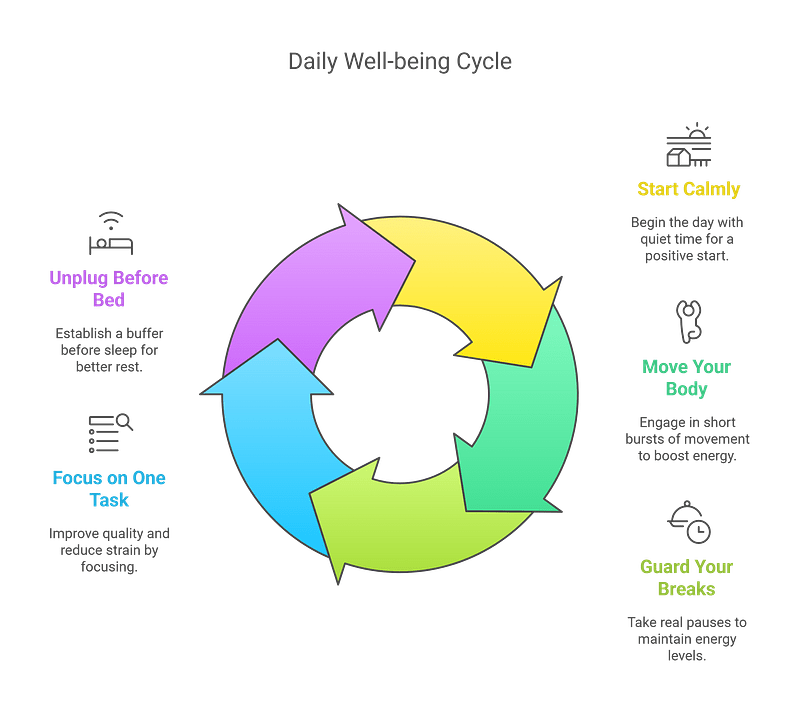
My Daily Well-Being Cycle: Image by the Author
Feeling overwhelmed? Implement these simple, actionable strategies today to manage stress and prevent burnout long-term.
Prevent burnout with 5 daily habits focused on sustainable energy and stress management. Actionable advice for busy professionals.
Remember that feeling? Like you’re running on a treadmill that keeps speeding up, no matter how fast you go? Your brain feels fuzzy, your energy is MIA, and even small tasks feel like climbing Mount Everest.
Yeah. I know that feeling way too well.
There was a time when “busy” felt like a badge of honour.
I juggled a demanding job, personal commitments, and the endless pinging of notifications.
I thought pushing through exhaustion was just… what successful people did. Until I hit a wall. Hard.
Burnout isn’t just being tired; it felt like my internal battery was completely corroded.
Everything felt heavy, pointless. It was scary.
Recovering took time, and it made me realise something crucial: burnout prevention isn’t about massive life overhauls (though sometimes those help!).
It’s often about the small, consistent things you do every single day. It’s about building sustainable productivity, not just short bursts followed by crashes.
So, I started experimenting.
I looked for simple stress management techniques and daily habits for energy that I could actually stick with, even on hectic days.
This isn’t about adding more to your overflowing plate. It’s about weaving tiny shifts into your routine that help you manage energy and keep avoiding exhaustion before it takes hold.
Let’s look at five habits that made a real difference for me.
Key Takeaways
- Start Calm, Not Crazy: A few minutes of quiet before the day swallows you whole changes everything.
- Move Your Body (Even a Little): Short bursts of movement break up stress and boost energy.
- Guard Your Breaks Fiercely: Real pauses, including a proper lunch, are non-negotiable for energy.
- One Thing at a Time: Stop juggling. Focus improves quality and reduces mental strain.
- Unplug Before Bed: Create a buffer zone between work mode and sleep mode for better rest.
Habit 1: The Five-Minute Morning Anchor
My old morning routine? Alarm blares, grab phone, scroll emails/news/social media while half-awake, panic about the day, rush rush rush.
Sound familiar?
I was starting my day already stressed, already reacting. My brain felt like a pinball machine before I even had coffee.
The change? Almost embarrassingly simple.
Before touching my phone, before the chaos begins, I take just five minutes.
- Sometimes I sit quietly and focus on my breath.
- Sometimes I just stare out the window with a cup of tea.
- Sometimes I jot down one thing I’m grateful for (sounds cheesy, works wonders).

It’s not deep meditation (though that’s great too!). It’s just creating a tiny pocket of calm before the storm.
It sets a different tone for the day. It feels like putting on my own oxygen mask first.
This tiny habit became a powerful stress management technique for me.
It doesn’t magically make problems disappear, but it helps me face them with a slightly steadier hand.
It’s a small deposit in my daily habits for the energy bank.
Try it tomorrow. Five minutes. Before the phone. Just be still. See how it feels.
Habit 2: The Midday Micro-Move
I used to sit glued to my chair for hours. Back-to-back meetings, deep work sessions… I’d stand up finally and feel stiff, drained, and headachy.
My body was basically screaming at me, but I ignored it in the name of “productivity.”
Ironically, that deep focus would often start to fray after hours of sitting.
Then I started incorporating micro-movements.
I didn’t suddenly become a gym rat. We’re talking small stuff.
- Setting a reminder to stand up and stretch every hour.
- Walking around the room during a phone call.
- Doing a few jumping jacks between meetings (when my camera was off, obviously!).
- Taking the stairs instead of the elevator.
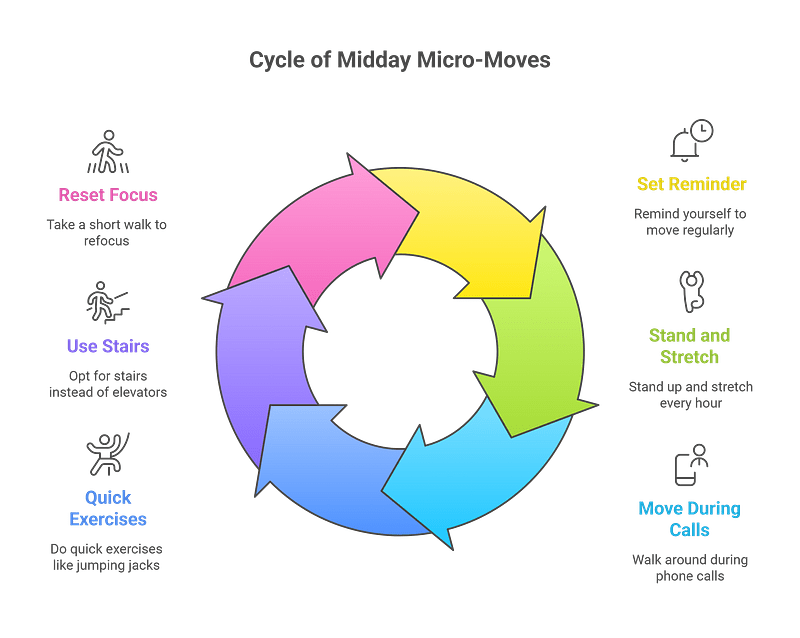
It sounds trivial, right? But breaking up long periods of sitting does wonders for avoiding exhaustion.
It gets the blood flowing, clears the mental cobwebs, and releases a bit of physical tension.
Even a two-minute walk away from my desk helps reset my focus.
This simple form of workplace wellness isn’t about fitness goals; it’s about breaking the cycle of sedentary stress.
It prevents that afternoon slump from hitting quite so hard.
Think about where you could sneak in just 5–10 minutes of movement throughout your day. A quick walk outside? Stretching breaks? It adds up.
Habit 3: Defending Your Downtime (Especially Lunch!)
“I’ll just eat at my desk while I finish this email.” How many times have I said that? Too many.
My “breaks” used to be scrolling social media or catching up on more work emails.
I wasn’t actually pausing. I was just switching screens.
This is a fast track to draining your battery and kills sustainable productivity.
Real breaks are crucial for burnout prevention. Your brain needs downtime to process information and recharge. This means stepping away from your work — physically and mentally.
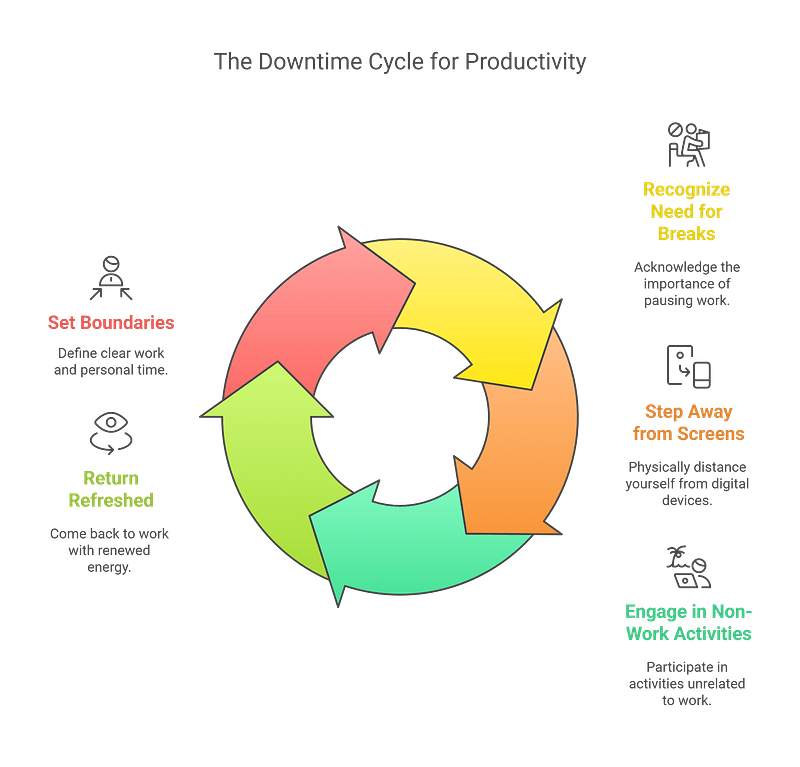
The biggest battle for me? Lunch.
- Actually taking a full 30 minutes (or more!) away from my screen.
- Eating without typing. Maybe going outside for a few minutes.
It felt almost rebellious at first! Like I was wasting precious time.
But the difference was noticeable. I came back to work feeling refreshed and less frazzled.
My afternoon focus improved. It wasn’t lost time; it was an investment in the rest of my day.
This applies to small breaks too.
Instead of checking your phone for 5 minutes, try looking out the window, listening to a song (without working), or just closing your eyes.
And boundaries at the end of the day? Crucial.
Defining a clear “off” time and sticking to it (as much as humanly possible) protects your personal time and energy reserves.
Guard your breaks. They aren’t luxuries; they are necessary maintenance for your brain and body.
Habit 4: The Myth-Busting Power of Single-Tasking
Our world screams, “Multitask!”
We juggle emails while on calls, switch between ten browser tabs, try to write a report while keeping an eye on Slack…
I used to pride myself on my multitasking skills. Turns out, I was just switching tasks rapidly and poorly, feeling scattered, and making more mistakes.
My brain felt like it was short-circuiting. This constant switching is a major source of stress.
Embracing single-tasking felt like swimming against the current, but it’s been a game-changer for my stress management techniques.
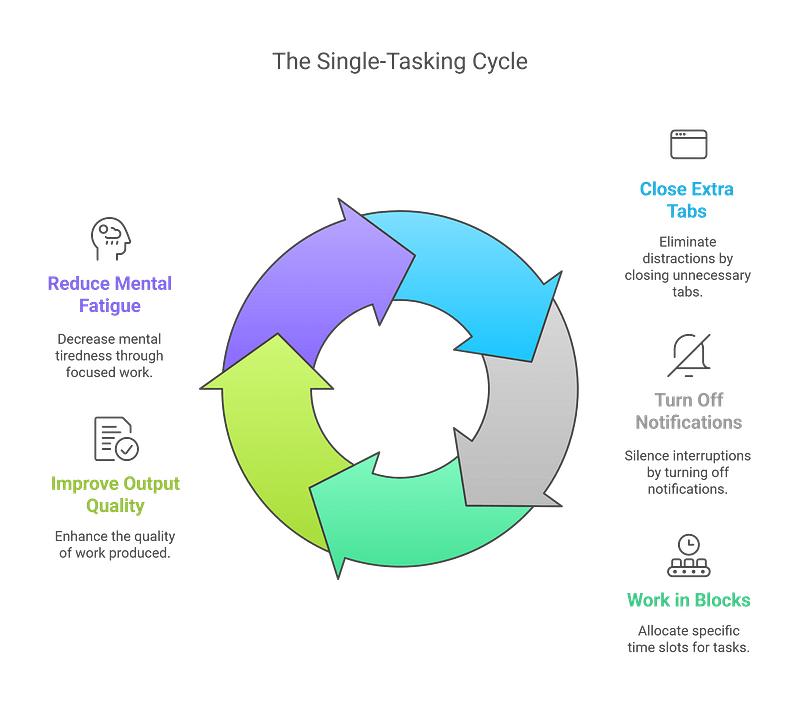
When I need to focus, I try really hard to just do that one thing.
- Close Extra Tabs: Seriously, just the ones you need for the task at hand.
- Turn Off Notifications: Silence the pings and pop-ups for a set period. They can wait.
- Work in Blocks: Dedicate a specific time slot for a specific task and try to honour it.
It’s not always possible, I get it. Some jobs involve constant interruption.
But finding even short pockets of time (25 minutes? 45 minutes?) for focused, single-task work can dramatically improve the quality of your output and reduce that feeling of being mentally pulled in a million directions.
- It fosters sustainable productivity because you actually finish things, rather than having ten things half-started.
- It leads to less mental fatigue at the end of the day.
Give it a shot. Pick one important task today and dedicate a focused block to only that. See how much progress you make.
Habit 5: The Pre-Sleep Digital Sunset
My worst burnout phase coincided with terrible sleep. And my terrible sleep was fueled by… my phone.
Scrolling news, checking work email one last time, falling down social media rabbit holes right before trying to sleep.
My brain was wired, anxious, and definitely not ready for rest.
This completely sabotages your daily habits for energy.
Creating an “evening wind-down ritual” sounds fancy, but it just means creating a buffer between the busyness of the day and bedtime.
For me, the biggest part was implementing a “digital sunset”—putting screens away at least 30–60 minutes before bed.

No more emails. No more newsfeeds. No more scrolling.
Instead?
- Reading a physical book (a real page-turner!).
- Listening to calming music or a podcast.
- Gentle stretching.
- Chatting with my partner.
Anything that signals to my brain: “Okay, time to slow down now.”
This simple boundary made a massive difference in my sleep quality.
Better sleep means more energy, better mood, clearer thinking… all essential defences against burnout.
It’s a foundational piece of burnout prevention and overall workplace wellness (because wellness extends beyond work hours!).
What could your digital sunset look like? What calming activity could replace that last-minute screen time?
Wrapping Up
Beating burnout isn’t about heroic efforts; it’s about consistent, kind choices.
These five habits — the morning anchor, micro-moves, defended breaks, single-tasking focus, and the digital sunset —aren’t revolutionary. They’re small. They’re simple.
But practiced daily, they build resilience. They help manage stress. They foster sustainable energy.
Don’t try to implement all five perfectly tomorrow.
Pick one that resonates most. Try it for a week. See how it feels.
Be patient with yourself. Building better habits takes time.
But investing in these small ways is investing in your long-term well-being and your ability to show up fully, both at work and in life.
You deserve to feel energised, not exhausted.
Your Turn
Which of these daily habits feels most challenging for you to implement?
Or do you have another small daily habit that helps you prevent burnout? Share your thoughts in the comments!
Thanks for reading…
Don’t forget to leave your comments about what you thought of this story.
Here is some information about me and how to connect with me on different platforms.
Discover more from nom@d learning
Subscribe to get the latest posts sent to your email.
 nom@d learning
Leave a comment