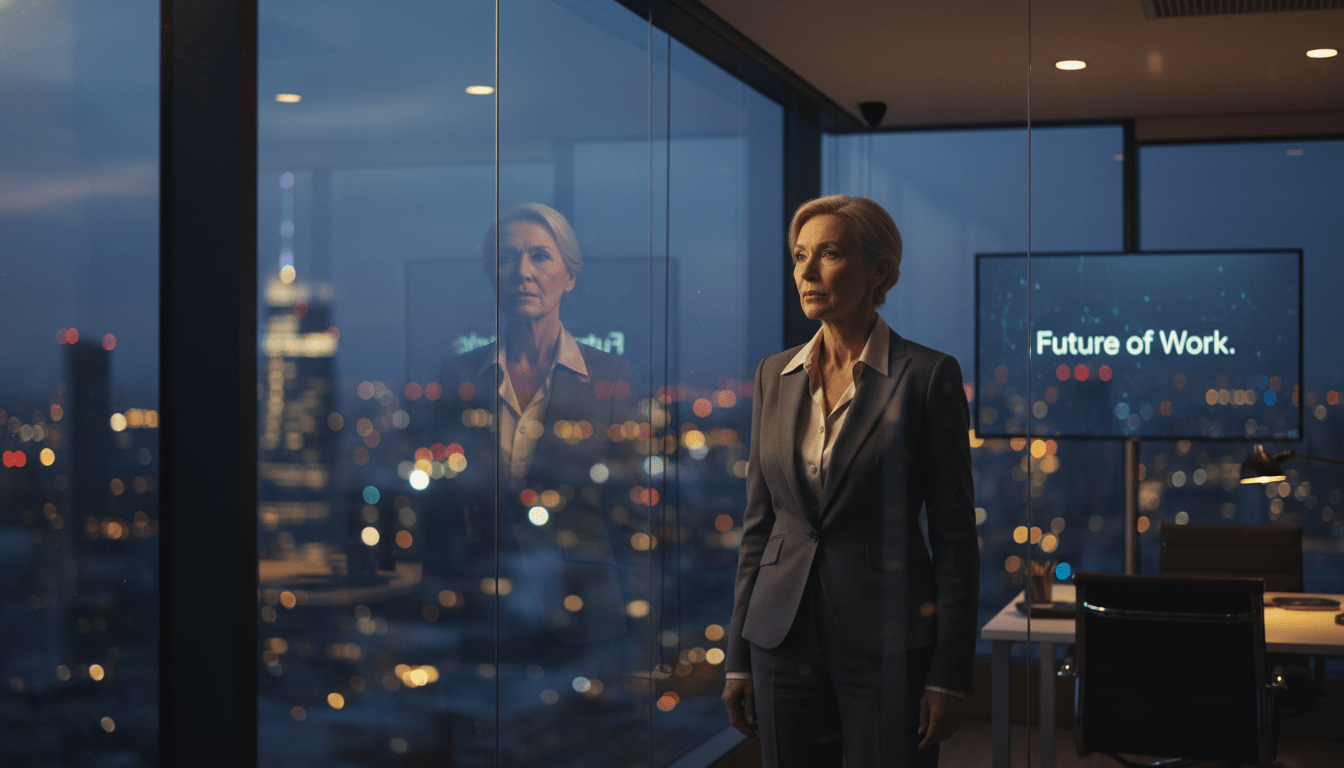
Understanding the systemic collision of housing insecurity, ageism, and the gender gap that is leaving a generation behind.
During my years working with large organisations, I often heard colleagues dream about the ‘Grey Nomad’ lifestyle. We pictured retirees hitching up caravans, touring the coast, and spending their children’s inheritance with carefree abandon. It was a comforting narrative. It suggested that a life of hard work leads inevitably to a sunset of leisure.
As I transitioned into a broader advisory space from full-time roles, I began to see a different reality. The data tells a story that contradicts our comfortable assumptions. OECD figures reveal that nearly one in four Australians over 66 lives in relative income poverty. This is a staggering statistic for a wealthy nation.
We are an outlier, and not in a good way. While the OECD average for elder poverty sits at around 14%, Australia hovers near 23%. We trail significantly behind nations like New Zealand and Canada. This imbalance is not just a gap in welfare; it is a structural chasm.
During my work on projects focused on organisational capabilities, I realised we were ignoring a massive demographic. We are facing a collision of three systemic failures.
- First, a housing market built for owners.
- Second, a superannuation system designed for unbroken male employment.
- Third, a corporate culture infected by the ‘grey ceiling’.
This issue isn’t just about fairness. It is about professional legacy and the economic stability of our future.
Key Takeaways
- Housing tenure has replaced income history as the single biggest predictor of poverty in later life. Renters face severe financial peril.
- Women over 55 are the fastest-growing demographic of homeless people in Australia. The cumulative effects of the gender pay gap drive this trend. Additionally, broken superannuation models contribute to this issue.
- Ageism in the workforce accelerates economic issues. It forces capable workers into poverty. It also drains organisations of vital institutional wisdom.
The Structural Flaw: The Crumbling Fourth Pillar
Australia’s retirement system was never designed to stand on three legs. It was built on four pillars: the age pension, superannuation, private savings, and—crucially—home ownership.
For decades, we assumed that by the time a worker retired, they would own their home outright. This ownership was the invisible safety net. It kept living costs low when income dropped to pension levels.
But that pillar is crumbling.
In my experience analysing workforce trends, I have observed a shift in personal well-being metrics. This shift correlates directly with housing stress. As home ownership rates decline, we are uncovering a critical weakness in its design.
The Rent Trap
Housing tenure is now the new dividing line for poverty. If you own your home, the pension might be enough. If you rent, it is almost certainly not.
- The maths is brutal: a single pensioner renting privately often spends more than 60% of their income on housing alone.
- The remainder: This leaves less than $20 a day for food, energy, medicine, and transport.
- The future trend: we are seeing a shift from home ownership to lifelong renting for Gen X. This signals that the crisis we see today is only the beginning.
The Gender Penalty: The Face of the Crisis
We must face a hard truth. The face of this economic emergency is overwhelmingly female.
Women over 55 are now the fastest-growing demographic of homeless people in Australia. These are the ‘hidden homeless’. They are often couch-surfing, living in cars, or staying in temporary accommodation.
I recall working with a team. A highly capable female colleague, approaching 60, quietly confessed she was sleeping in her vehicle. She had worked her whole life. But a divorce and a rental hike had wiped her out. It was a stark lesson in how fragile security can be.
Systemic Causes
This is not a result of bad personal choices. It is the result of systemic design.
- The Super Gap: Women retire with 25–30% less superannuation than men. This is due to the gender pay gap and career breaks for caregiving. Our system links super to paid work, placing zero value on unpaid care.
- Grey Divorce: Relationship breakdowns in later life are financially devastating. They often leave women with insufficient assets to re-enter a hostile housing market.
These women are forced into precarious living situations. We need to focus on building psychological safety in our communities. Nonetheless, we can’t do that without addressing the economic bedrock of housing.
The Grey Ceiling: Ageism as an Economic Accelerant
The ‘grey ceiling’ is the invisible barrier that prevents older workers from retaining employment or re-entering the workforce. It is the fuel on the fire of this economic crisis.
When I was involved in recruitment panels for various organisations, I witnessed this bias firsthand. It was rarely explicit. No one said, ‘They are too old.’
Instead, I heard code words.
The Corporate Barrier
- ‘Cultural fit’ is often code for ‘won’t hang out at the pub with the 20-somethings’.
- ‘Overqualified’ is code for ‘we are intimidated by their experience’.
- ‘Lack of digital nativism’: An assumption that older workers can’t learn new software, which is statistically untrue.
Nearly one in three Australian organisations admits to being hesitant to hire workers over 50. This is escaping cognitive traps failure on a massive scale. We are letting bias override economic logic.
The Multiplier Effect
The interaction between the rental crisis and ageism is toxic.
- When an older renter loses a job, finding new employment takes twice as long for them. This is compared to the time it takes a younger worker.
- They are forced to draw down on savings meant for their 80s just to survive their 50s and 60s.
- We see an ‘unretirement’ trend. Retirees try to return to work due to cost-of-living pressures. They often find the door bolted shut.
The Leadership Angle: Wisdom Wasted
Ageism is not just cruel; it is bad business.
In my time advising leadership teams, I have argued that seeking diverse perspectives must include age diversity. By ignoring older workers, companies invite ‘brain drain’. They lose institutional memory that can’t be replaced by a database or an AI model.
Challenging Youth Bias
There is a pervasive myth that innovation is the exclusive domain of the young. This is false. True innovation comes from synthesising new ideas with deep experience.
Authentic leadership, or what I call ‘Growthenticity’, requires us to look beyond the ‘new and shiny’. It demands we create environments where experience is respected, not feared. Leaders must guarantee a safe environment. Older workers should be capable of sharing their wisdom without fearing that they are training their cheaper replacements.
Pathways to Change: Actionable Solutions
We are not helpless in this. This is a design flaw, and designs can be changed. Leaders and policymakers have levers they can pull right now.
For Corporate Leaders
- Blind Recruitment: Remove dates of birth and graduation years from CVs. This forces hiring managers to look at skills and experience, not age.
- Flexible Work: Create roles specifically designed for the ‘unretirement’ phase. We must look at the hybrid work model as a tool for retention, not just for young parents.
- Mid-Life Reviews: Implement financial wellbeing and career longevity checks for employees at age 45+. Help them plan for a longer working life.
For Policymakers
- Rent Assistance: There must be an immediate increase in Commonwealth Rent Assistance to reflect real-world prices.
- Super Reform: We must reform superannuation to account for unpaid care work. This will close the gap that penalises women for keeping families together.
We need to be leading change effectively by acknowledging that the current model is broken.
Conclusion: Restoring Economic Dignity
Elder poverty in a rich nation is not an inevitability. It is a choice we make through our policies and our corporate cultures.
The ‘grey ceiling’ is an economic emergency. We can’t claim to be a prosperous nation. We should not leave the generation that built it to choose between rent and medicine.
I call on business leaders to view the ‘multigenerational workforce’ not just as a diversity metric to tick off. See it as a critical lever for economic stability. See it as a source of competitive advantage.
When we lift the ceiling, we don’t just help older Australians. We stabilise the economy for everyone.
Wrapping Up
We must stop viewing the ageing workforce as a burden and start seeing it as an asset. By addressing housing insecurity and smashing the grey ceiling, we restore dignity to our elders and sanity to our economy. The time for passive observation is over; the time for structural repair is now.
🌱 The Grey Ceiling: The Growthenticity Connection
The core ideas explored in this article aren’t just isolated concepts; they deeply resonate with the principles of what I call ‘Growthenticity’:
‘The continuous, integrated process of becoming more oneself (authentic) through leading with questions, learning through action, and growing by embracing uncertainty and imperfection, all fuelled by curiosity.’
Ageism often stems from a lack of curiosity. A lack of curiosity often leads to a refusal to question the significance of features. These features can include grey hair or a lengthy resume.
Growthenticity challenges us to lead with questions rather than assumptions. It asks us to embrace the ‘imperfection’ of a multi-generational team.
We need to understand that the friction between new ideas and old wisdom is where true growth happens. By rejecting the grey ceiling, we are choosing to be more authentic leaders.
We value the human being over the date of birth.
👉 Check out my free and paid Substack offerings at Lead, Learn, Grow. You can further explore concepts like ‘Growthenticity’. You will also gain access to practical tools and connect with a supportive community. This community focuses on encouraging authentic and impactful growth.
Join us as we unpack these ideas and support each other on our journeys.
🌱 Learn more about me and what I offer my free and paid Substack subscribers.🌱
Here is some information about me and how to connect with me on different platforms.
Your Turn
Have you observed the ‘grey ceiling’ in your own industry? What is one step you believe your organisation could take today to value experience over ageing?
Discover more from nom@d learning
Subscribe to get the latest posts sent to your email.
 nom@d learning
Leave a comment