
AI is transforming businesses globally as capabilities rapidly advance. Organisations are leveraging AI’s powerful data processing and predictive abilities across functions to streamline operations, improve decision-making and enhance customer experiences.
This article aims to help leaders understand AI’s strategic implications and opportunities. It provides insights for developing an AI strategy that can provide competitive advantages.
Table of Contents
AI and business strategy
AI is changing the way businesses operate and is becoming an essential part of business strategy. Companies are using AI to streamline processes, automate tasks, and gain insights into their operations. Here are some of the key ways AI is transforming the corporate world:
Automation
One of the most significant benefits of AI is automation. AI-powered machines can perform repetitive tasks with greater speed and accuracy than humans. Companies are using AI to automate everything, from customer service to manufacturing. By automating routine tasks, companies can free up their employees’ time to focus on more complex and strategic work.
For example:
- Chatbots and virtual assistants are automating basic customer service tasks like answering FAQs and resolving simple issues.
- Robotic process automation is eliminating manual data entry jobs by automating form processing and contract review.
- AI is automating repetitive quality inspection tasks in manufacturing by utilising computer vision to identify defects.
- Delivery robots are automating the last-mile delivery of packages on college campuses and in some urban areas.
- Self-driving vehicles have the potential to automate long-haul trucking and taxi/ride-hailing services.
- AI assistants like Siri and Alexa are automating simple tasks for consumers like setting reminders, making lists, and playing music.
- Machine learning algorithms can automate routine medical scans by identifying anomalies and making referrals to specialists.
- Financial trading algorithms are automating investing decisions by analysing huge amounts of market data in real-time.
Data analysis
Data analysis is another area where AI is having a significant impact. AI systems can analyse vast amounts of data, identify patterns, and make predictions. Companies are using AI to gain insights into their operations and make data-driven decisions.
For example:
- AI is analysing customer purchase histories to predict buying habits and customise product recommendations.
- Machines are reviewing medical records to identify at-risk patients and help physicians make more accurate diagnoses.
- AI tools are monitoring networks and systems to detect anomalies, predict failures, and prevent cybersecurity threats.
- ML algorithms can analyse user behaviour data to personalise web and app experiences in real-time.
- AI is analysing satellite and sensor data to predict weather patterns, track natural disasters, and monitor climate change impacts.
- Manufacturers are using AI to detect production defects by assessing visual and sensor data from assembly lines.
- AI is analysing social media posts and reviews to gauge customer sentiment towards brands and improve products.
- AI-powered analytics tools help marketers identify targeted audiences, optimise ad campaigns, and measure campaign effectiveness.
- Financial institutions use AI to uncover fraud patterns by mining transaction records and flagging suspicious activity.
Predictive maintenance
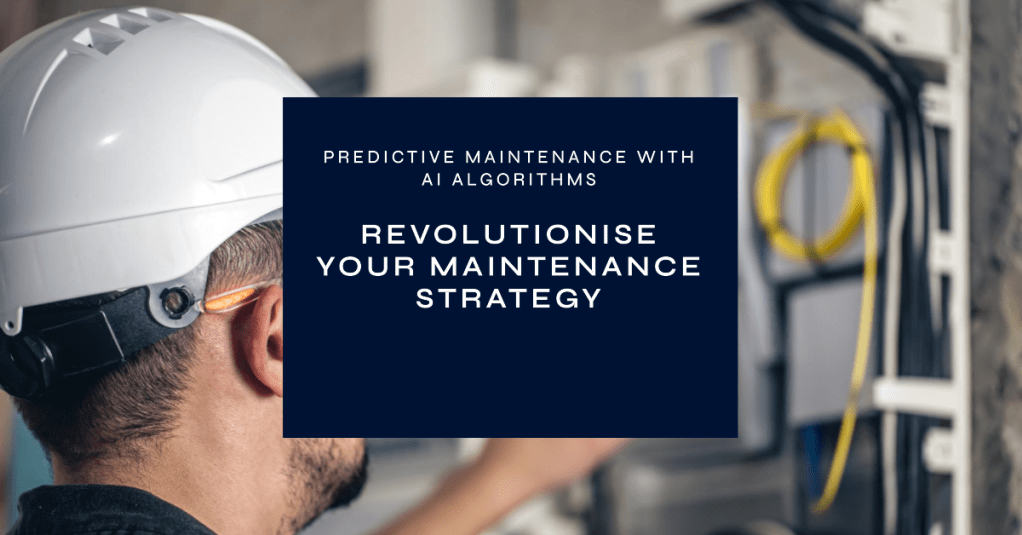
AI is also transforming the way companies approach maintenance. Predictive maintenance uses AI algorithms to monitor equipment and identify potential issues before they occur. By predicting when maintenance is needed, companies can minimise downtime and reduce costs.
For example:
- AI tools use sensor data to predict breakdowns and optimise maintenance schedules for heavy machinery, reducing downtime.
- Machine learning helps detect anomalies in flight data to predict aircraft engine issues for predictive repairs or replacement.
- AI monitors manufacturing processes to forecast when parts or tools will need replacement, avoiding unexpected outages.
- AI analyses structural stress data to predict infrastructure defects in bridges, tunnels, etc. and flag high-priority problems.
- AI enables predictive maintenance of wind turbines based on power output data, minimising repairs during operation.
- AI tracks medical device usage data to predict service needs and streamline maintenance scheduling.
- AI analyses water system sensors to predict pipe failures or pump issues before catastrophic breakdowns.
- AI monitors equipment vibration patterns to predict mechanical failures for vehicles, facilities management, etc.
- By monitoring electronic component usage, AI helps predict circuit board failures in devices like phones or routers.
Fraud detection
AI is also being used to detect fraud. Fraud detection algorithms can analyse transaction data and identify patterns that may indicate fraudulent activity. Companies are using AI to detect and prevent fraud in industries such as finance, healthcare, and insurance.

For example:
- Banks use AI to analyse spending patterns and flag credit card transactions that seem suspicious for possible identity theft.
- Insurance providers deploy AI models to identify patterns in medical claims that could suggest insurance fraud, such as falsified procedures.
- AI tools analyse online user behaviour to detect fraudulent account registrations and cybercriminal network patterns.
- AI monitors employee email and file access for anomalies that may signal internal embezzlement or data theft schemes.
- Telecommunications companies use AI to identify irregular call and usage patterns that could point to compromised or cloned accounts.
- Government agencies apply AI-powered analytics to uncover tax refund fraud or fake unemployment benefit applications.
- Utilities deploy AI to pinpoint unusual energy usage that may be from metre tampering or illegal diversion of services.
- AI technology helps online merchants spot the telltale behaviour of credit card testing, return abuse, or reshipping scams.
- AI extracts insights from dark web chatter to predict emerging identity theft and phishing methods.
Customer service
Customer service is another area where AI is having an impact. AI-powered chatbots can handle routine customer enquiries and provide support 24/7. By using AI for customer service, companies can provide faster and more efficient service, improving the overall customer experience.

For example:
- Chatbots use NLP to answer basic FAQs on company websites 24/7, freeing agents for complex issues.
- AI assistants manage simple requests like address changes, appointment bookings, and order status checks.
- Customers can get instant assistance from AI via text or mobile apps for services on the go.
- AI analyses support transcripts to identify recurring issues and optimise knowledge bases.
- AI chatbots can understand the intent behind customer questions and have natural conversations.
- AI customer service tools allow self-service via smart speakers, reducing call centre volumes.
- AI uses sentiment analysis from surveys and reviews to flag driver issues and improve customer satisfaction.
- AI monitors social media for service problems and automatically triggers agents to address them.
- AI contact centres integrate chat, email, and voice to provide consistent service across channels.
- AI improves the customer experience for expensive equipment by enabling remote-guided support.
How to implement AI in your business
If you’re considering implementing AI in your business, here are some steps you can take to get started:
Identify the business problem
The first step is to identify the business problem you want to solve with AI. Determine which areas of your business could benefit from automation or improved data analysis.
Evaluate AI solutions
Once you’ve identified the business problem, research AI solutions that can address it. There are many AI tools and platforms available, so it’s essential to evaluate your options carefully.
Develop a strategy
Develop a strategy for implementing AI in your business. Determine how you will integrate AI into your existing processes and what resources you will need.
Train your employees
It’s essential to train your employees on how to use AI tools effectively. Provide training and support to help your employees understand how AI can benefit your business.
Monitor and refine
Finally, monitor and refine your AI implementation. Continuously evaluate how AI is impacting your business and make adjustments as needed.
FAQs
Q1. What is the role of AI in business strategy?
AI is becoming an essential part of business strategy. Companies are using AI to streamline processes, automate tasks, gain insights into their operations, and make data-driven decisions. AI can help businesses optimise their operations, increase efficiency, and improve the overall customer experience.
Q2. How can AI improve customer service?
AI-powered chatbots can provide 24/7 customer support, handle routine enquiries, and resolve customer issues quickly and efficiently. By using AI for customer service, companies can reduce response times, improve the overall customer experience, and free up their employees’ time to focus on more complex tasks.
Q3. Is AI expensive to implement?
Implementing AI can be expensive, depending on the scale and complexity of the project. However, there are many affordable AI solutions available, and the cost of implementing AI has been decreasing in recent years. Additionally, the benefits of AI can outweigh the costs, making it a worthwhile investment for many businesses.
Q4. Can AI replace human workers?
While AI can automate many routine tasks, it is unlikely to replace human workers entirely. AI works best in conjunction with human intelligence, and there will always be tasks that require human skills and expertise. Additionally, AI can create new job opportunities in fields such as data science and AI engineering.
Q5. Is AI safe and secure?
AI can be safe and secure when implemented correctly. However, like any technology, AI can also be vulnerable to security threats such as hacking and data breaches. It’s essential to take steps to ensure that your AI systems are secure, such as implementing robust cybersecurity measures and regularly monitoring for potential threats.
Conclusion
In conclusion, AI is rapidly transforming businesses worldwide through powerful data and predictive abilities.
Strategic adoption of AI provides competitive advantages over slower adopters.
This article outlined automating tasks, analysing data, predictive maintenance, and enhanced customer service through AI.
A structured but agile strategy was presented to maximise AI’s benefits like efficiencies, cost savings, and customer value.
While implementing AI requires planning and resources, the returns make it strategic for most companies.
Moving forward, AI adoption will accelerate as tools improve. Leaders understanding AI applications now will best support strategic goals through a human-centered, skills-focused approach.
Other blog posts in this series:
- Artificial Intelligence (What is AI?)
- Understanding AI Technology and its impact on Business
- Managing AI Projects and Teams
- Ethical and Social Implications of AI
- Building an AI-driven Culture
- Future Trends in AI
Discover more from nom@d learning
Subscribe to get the latest posts sent to your email.
 nom@d learning
Leave a comment